

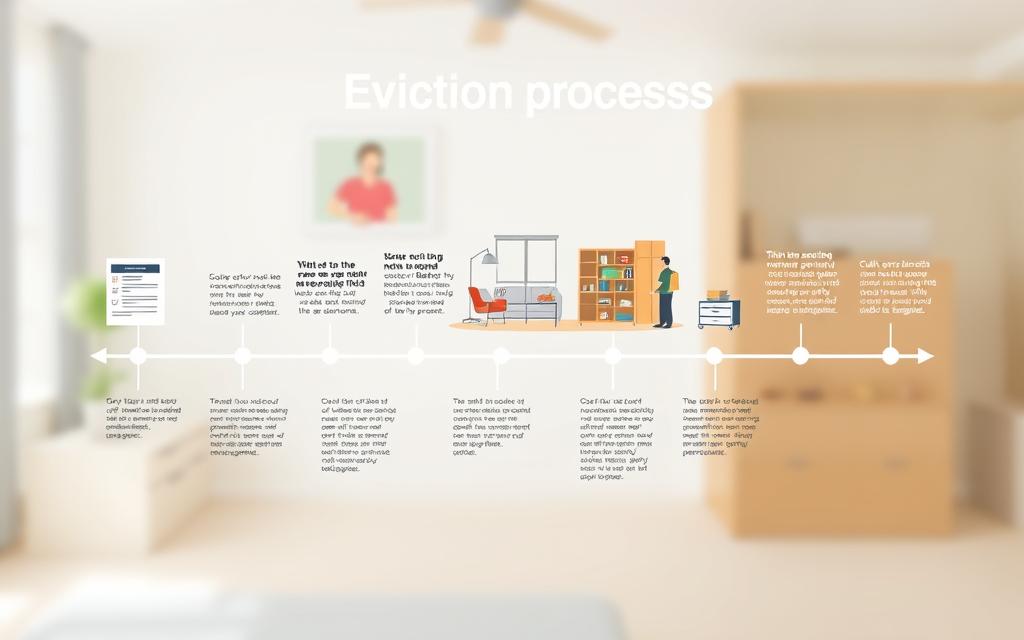
What if everything you assumed about evictions was missing critical details? While many assume removing a tenant is straightforward, the reality involves layers of legal steps, rights, and timelines that vary dramatically by location. This guide breaks down the complexities to help landlords and tenants navigate the system confidently.
Understanding the eviction process requires clarity on notices, court procedures, and state-specific rules. For example, Maine allows a 7-day notice for lease violations, while Florida mandates a 3-day period for unpaid rent. These differences highlight why knowing local laws is essential to avoid costly delays.
We’ll explore key phases, from initial warnings to final court orders, and explain terms like “summary process summons” or “possession judgment.” Whether you’re a landlord protecting your property or a tenant safeguarding your rights, this guide offers actionable insights backed by legal aid resources and state court data.
Table of Contents
Key Takeaways
- Eviction timelines depend on state laws, with notices ranging from 3 days to several weeks.
- Court hearings and mediation can extend the process by 30 days or more.
- Tenants often have 7 days to retrieve belongings post-eviction in most states.
- Proper documentation, like lease agreements, is critical for legal compliance.
- Contested cases or procedural errors can delay evictions by months.
Overview of the Eviction Process
Legal evictions demand precision – one misstep can derail the entire procedure. Every phase hinges on specific terms and actions defined by state statutes. Let’s unpack the framework governing tenant-landlord disputes.
Key Terminology and Concepts
An eviction notice serves as the formal starting point. This document outlines violations like unpaid rent or property damage. In Maine, landlords must issue a 7-day notice for lease breaches, while Florida requires a 3-day warning for nonpayment.
Lease agreements act as legal guardrails. They specify payment deadlines, maintenance duties, and grounds for termination. Tenants retain rights to contest claims in court, even after receiving notices.
Steps from Notice to Possession
First, landlords deliver written warnings via certified mail or in-person service. Colorado uses 3-day notices for urgent cases, whereas month-to-month rentals might require 30-day alerts.
If unresolved, courts schedule hearings within 10-20 days. Judges review evidence like signed leases or repair records. Successful rulings grant possession judgments, allowing sheriffs to oversee property reclamation.
Florida’s process exemplifies efficiency: landlords file complaints swiftly after notice expiration. Tenants get five days to respond before default judgments favor property owners.
Understanding How Long Does It Take to Evict Someone
Eviction timelines resemble unpredictable weather—clear skies can turn stormy without warning. Multiple elements interact to determine whether a case resolves in weeks or stretches into months. Local court efficiency, tenant counterclaims, and notice requirements all shape outcomes.
Factors Impacting the Timeline
Court congestion creates major delays. Texas landlords often wait 21-60 days due to docket backups, while rural areas move faster. Tenant responses also matter—those filing defenses add 30+ days through hearings and appeals.
Notice type sets the initial pace. A 3-day rent demand accelerates action versus 30-day lease termination warnings. Texas requires 24-hour vacate periods after writs, but other states mandate longer grace times for belongings.
Procedural missteps freeze progress. Missing a mandatory waiting period or misfiling documents forces restarts. For example, Florida’s 5-day tenant response window locks strict deadlines—landlords skipping this face dismissal.
Jurisdictional quirks further complicate timelines. Some courts prioritize evictions, others handle them chronologically. Urban zones like Houston face longer waits than smaller counties, proving location often dictates speed.
Legal Requirements for Eviction in the United States
Navigating eviction laws requires balancing property rights with tenant protections. Federal and state rules create a framework that prevents abrupt removals while protecting housing stability.
Landlord and Tenant Rights
Landlords must follow strict procedures to reclaim property. A valid court order is mandatory—changing locks or shutting off utilities constitutes illegal activity. Tenants can sue for damages if removed without due process.
Renters retain rights even after lease violations. For example, Maine allows 7 days to fix issues like unpaid rent. Florida requires landlords to file formal complaints before scheduling hearings.
State-Specific Regulations Overview
Rules vary widely across jurisdictions. Some states prioritize speed, while others emphasize tenant safeguards. Public housing often demands 30-day notices, but private leases follow different timelines.
| State | Notice Period | Court Hearing Timeline | Tenant Cure Rights |
|---|---|---|---|
| Maine | 7 days | 14-21 days | Yes (fix violations) |
| Florida | 3 days | 5-10 days | No for nonpayment |
| Texas | 3 days | 10-20 days | Partial (rent only) |
Consulting an attorney or lawyer ensures compliance with local codes. They help draft valid notices and represent clients during contested cases.
With Cause vs. Without Cause Evictions
Eviction scenarios split into two distinct paths: those rooted in tenant actions and those driven by landlord decisions. Understanding this divide helps both parties anticipate rights and obligations under lease agreements.

Defining “With Cause” Scenarios
Material lease breaches trigger “with cause” cases. Colorado’s HB24-1098 lists valid reasons like unpaid rent (10-day notice) or property damage (3-day notice). Tenants violating noise clauses or subletting bans also qualify.
Examples of No-Cause Evictions
Month-to-month arrangements often allow termination without violations. Colorado requires 90-day notices for tenants occupying properties over a year. Landlords renovating units or converting rentals to personal use fall into this category.
Clear lease terms prevent disputes. Agreements should specify payment deadlines, maintenance duties, and grounds for termination. Courts prioritize documented violations over verbal claims during contested cases.
Recent laws reshape no-cause options. Some states now mandate “just cause” requirements, while others permit non-renewals after fixed terms. Always review local statutes before issuing notices.
Understanding Eviction Notices: 7-Day, 30-Day, and More
Eviction notices act as legal triggers – their format and delivery determine whether cases proceed or collapse. State laws dictate precise requirements for these documents, from content to service methods. Let’s examine common notice types and their critical compliance rules.
Legal Notice Requirements
A 7-day notice typically addresses urgent violations like unpaid rent. Maine requires landlords to include cure options in this notice, allowing tenants to resolve issues within the timeframe. Failure to specify payment instructions or court consequences invalidates the document.
Month-to-month tenants often receive 30-day notices. These require three delivery attempts in Maine, including certified mail and in-person service. Notices must align with rent payment cycles – terminating occupancy mid-month violates state statutes.
| Jurisdiction | Notice Type | Key Requirements |
|---|---|---|
| Maine | 7-Day | Must list cure options, allow rent payment within 7 days |
| California | 10-Day Response | Tenants get 10 business days to contest nonpayment claims |
| HUD Housing | 30-Day Federal | Itemized rent breakdown, hardship exemption details |
Written notice remains mandatory nationwide. Verbal warnings hold no legal weight. Public housing agencies follow stricter federal rules – HUD’s 30-day requirement includes income recertification instructions alongside rent demands.
Proper service prevents restarts. Landlords must document delivery attempts through signed receipts or witness confirmations. Courts dismiss cases lacking proof of valid notice delivery, emphasizing procedural precision.
The Court Process and What to Expect
Once an eviction notice expires, the legal battle shifts to formal court proceedings. This phase demands meticulous preparation, as judges scrutinize compliance with every procedural requirement.
Filing the Complaint and Summons
Landlords initiate lawsuits by submitting an eviction complaint to local courts. Filing fees typically range from $50-$500, depending on the state. Courts then issue a summons requiring tenants to respond within 5-15 days.
Service rules are strict. Sheriffs or neutral adults must deliver documents via in-person handoffs or certified mail. Tenants who ignore summons risk default judgments within 48 hours of deadlines.
Scheduling and Preparing for the Court Hearing
Courts set hearings 10-30 days after receiving responses. Urban areas like Los Angeles face 6-week delays due to overcrowded dockets. Landlords should bring:
- Signed lease agreements
- Rent payment histories
- Photographs of property damage
| State | Response Window | Hearing Timeline | Documentation Required |
|---|---|---|---|
| California | 5 business days | 14-21 days | Lease, 3-year payment records |
| Texas | 7 days | 10-14 days | Move-in checklist, repair requests |
| Florida | 5 days | 7-10 days | Certified mail receipts, witness affidavits |
Judges dismiss cases lacking proper evidence or procedural errors. Tenants presenting counterclaims about unsafe conditions can delay rulings by 45+ days. Always verify local rules – some courts mandate mediation before hearings.
How to Respond to a Summons and Complaint
Receiving an eviction summons marks a critical juncture where preparation meets legal strategy. Both tenants and landlords must act decisively to protect their rights while navigating strict procedural rules.
Tenant Action Plan
Respond within deadlines – typically 5-20 days depending on state laws. California allows 5 business days to contest nonpayment claims. Missing this window risks default judgments. Tenants should:
- Contact legal aid immediately (e.g., Washington Eviction Defense Line)
- File written responses with county clerks
- Mail copies to the landlord’s attorney
Evidence like rent receipts or repair requests strengthens defenses. Courts dismiss cases with improper service – tenants can challenge invalid summons delivery through motions.
Landlord Documentation Checklist
Property owners must prove compliance at every stage. Essential items include:
- Certified mail receipts for notices
- Signed lease agreements
- Dated photographs of property conditions
Florida landlords need witness affidavits, while Texas requires move-in checklists. Judges reject cases lacking concrete proof of violations or missed payments.
Both parties benefit from early legal counsel. Attorneys spot procedural errors like miscalculated deadlines or incomplete complaints. Tenants facing default judgments should request writ withdrawals and hearing continuances promptly.
Evictions for Written Leases vs. Tenants at Will
Structured contracts and informal arrangements demand distinct legal approaches when disputes arise. Written leases create binding timelines, while tenancies at will operate under looser frameworks. This distinction shapes eviction strategies and tenant protections.
Legal Standards for Different Agreements
Written leases lock in specific terms. North Carolina requires 10-day notices for rent issues in annual contracts. Tenants get opportunities to fix violations like late payments. Month-to-month renters receive 7-day notices with no cure options in many states.
Tenancies at will offer less stability. Landlords can terminate these arrangements faster – weekly rentals sometimes require just 2-day warnings. Courts prioritize lease language over verbal agreements during eviction hearings.
| Factor | Written Lease | Tenant at Will |
|---|---|---|
| Notice Period (Nonpayment) | 10-30 days | 3-7 days |
| Cure Rights | Mandatory in most states | Rarely allowed |
| Eviction Steps | Formal court filing required | Simpler summary process |
Case law shows stark contrasts. A Maine court dismissed an eviction attempt when a landlord skipped mandatory 91-day notices for annual leases. Conversely, Massachusetts upheld a 30-day removal of month-to-month tenants without cause.
Landlord-tenant dynamics shift with agreement types. Written contracts enable detailed violation claims, while informal deals rely on basic occupancy rules. Always verify state-specific requirements before acting.
How to File an Eviction Complaint: Step-by-Step
Filing an eviction complaint demands surgical precision with paperwork – a single missing document can collapse your case. Follow this roadmap to navigate court requirements while avoiding costly missteps.
Documentation and Filing Procedures
Start by gathering proof of lease violations. Essential items include:
- Signed rental agreements
- Dated payment records showing missed rent
- Copies of served notices (3-day or 30-day)
- Serve a valid notice: California requires 3-day warnings for unpaid rent. Use certified mail or in-person delivery.
- File unlawful detainer forms: Submit the complaint, summons, and cover sheet to your local court. Fees range from $240-$450.
- Serve court papers: Hire a process server or sheriff to deliver documents within 5 days of filing.
| State | Filing Fee | Tenant Response Window | Required Evidence |
|---|---|---|---|
| California | $435 | 5 business days | Lease, 3-year payment history |
| Texas | $300 | 7 days | Move-in checklist, repair logs |
| Florida | $185 | 5 days | Certified mail receipts |
Tenants get 10-15 days to contest complaints after service. Courts dismiss filings with errors like serving a 3-day notice in a 7-day jurisdiction. Always verify local rules – recent laws like California’s AB 2347 extended response periods.
Finalize by requesting a court order for possession if tenants don’t respond. Judges require stamped proof of notice delivery and lease terms. Avoid self-help tactics like lock changes – these jeopardize your right to evict tenant legally.
Key Factors Affecting the Eviction Timeline
Eviction timelines hinge on a web of variables that can accelerate or stall outcomes. Urban courts in Texas often take 60 days to process cases, while rural Alabama might resolve them in 30. Tenants who pay rent after receiving notices can reset the clock, but procedural missteps create costly delays.

Impact of Court Backlogs and Jurisdiction
Overloaded dockets create major bottlenecks. California’s Los Angeles County faces 6-week waits for hearings due to high case volumes. Contrast this with Florida’s streamlined system, where judges issue possession judgments within 10 days of filing.
Jurisdictional rules add complexity. Texas requires landlords to wait 7 days after notices before filing, while New York mandates 14-day grace periods. Courts in tenant-friendly states like Oregon prioritize mediation, adding 20+ days to timelines.
Examples from Various States
Alabama’s process averages 4 weeks if tenants don’t contest. California’s extended 10-day response window gives renters more time to secure legal help. However, 40% of tenants still lose by default due to missed deadlines.
Tenant countermeasures like jury trial requests can stretch cases to 180 days in some states. Landlords in Illinois report 45-day delays when tenants claim unsafe housing conditions. Expedited processes exist for criminal activity – Nevada clears these cases in 7 days.
Actionable tips:
- File paperwork immediately after notice periods expire
- Check local court calendars for backlog alerts
- Offer payment plans to avoid court entirely
Urban landlords should budget 60+ days for contested evictions. Rural property owners often regain units 30% faster. Always verify state-specific rules – a Texas judgment won’t apply the same way in Maine.
Alternatives to Traditional Eviction
Resolving rental disputes doesn’t always require court battles. Flexible solutions like repayment plans and cash for keys often save time, money, and relationships. These approaches let both parties avoid the stress of formal proceedings.
Repayment Plans and Cash for Keys
Repayment plans give tenants structured timelines to settle debts. Landlords might split overdue rent into smaller weekly payments. For example, a $2,000 balance could become four $500 installments over a month. This keeps tenants housed while ensuring steady income for property owners.
The cash for keys strategy offers immediate resolutions. Tenants agree to vacate by a specific date in exchange for financial incentives. Typical amounts range from $1,000 to one month’s rent. This avoids court delays and lets landlords regain properties faster.
Both options require clear written agreements. Key details include move-out deadlines, payment schedules, and liability releases. Legal aid groups often provide free templates to ensure enforceability.
Benefits of alternatives:
- Faster resolutions (days vs. months)
- Lower legal fees and court costs
- Preserved tenant-landlord relationships
Always document every term. Verbal deals rarely hold up if conflicts resurface. Notarized signatures and witness attestations add legal weight to these arrangements.
Hiring an Attorney for the Eviction Process
Eviction disputes often spiral into legal mazes where one wrong turn leads to costly delays. Professional guidance becomes vital when navigating complex paperwork, tenant defenses, or jurisdictional quirks. Legal experts help both parties avoid pitfalls that could derail their case.

When Legal Representation Is Crucial
Contested cases demand immediate attorney involvement. Tenants filing formal responses or claiming unsafe conditions create legal battles requiring strategic defense. Landlords facing counterclaims about improper notices also benefit from expert support.
A lawyer proves invaluable when state laws conflict with lease terms. For example, Florida’s 5-day response window traps unprepared landlords into case dismissals. Attorneys spot missing certified mail receipts or miscalculated deadlines before judges notice.
| Scenario | Risk Without Attorney | Benefit With Attorney |
|---|---|---|
| Tenant Counterclaims | 45+ day delays | Faster resolution via evidence review |
| Improper Notice Service | Case dismissal | Document validation for compliance |
| Rent Dispute Mediation | Unfavorable terms | Negotiated payment plans |
Legal fees often pay for themselves. Landlords recover properties 30% faster with professional help, reducing vacancy losses. Tenants avoid wrongful removals by leveraging housing code violations as defenses.
Handling a court order requires precision during enforcement. Attorneys coordinate with sheriffs to schedule lockouts legally, preventing tenant lawsuits for illegal lock changes. This expertise turns chaotic processes into structured, predictable outcomes.
Potential Costs Involved in Eviction Proceedings
Eviction proceedings carry financial risks that extend beyond legal battles. Landlords face direct expenses like court fees and attorney bills, while indirect losses from unpaid rent or property damage compound over time. Strategic budgeting helps mitigate these impacts.
Legal Fees, Court Costs, and Loss of Rent
Filing an eviction starts with administrative expenses. Courts charge $50-$500 to process complaints, while serving notices adds $50-$150. Contested cases escalate costs – attorney fees range from $500 for simple filings to $5,000 for trials requiring evidence reviews and witness testimony.
Rent losses multiply during delays. A tenant owing $1,200 monthly could leave landlords $3,600 short after a 3-month eviction. Urban areas with backlogged courts worsen this strain. Texas landlords report 60-day waits, while Florida’s streamlined system reduces vacancies.
| State | Filing Fee | Attorney Fee Range | Average Timeline |
|---|---|---|---|
| California | $435 | $1,800-$4,500 | 45 days |
| Texas | $300 | $750-$3,000 | 60 days |
| Florida | $185 | $500-$2,200 | 21 days |
Judgments favoring landlords don’t guarantee payment. Tenants may lack assets to cover debts, leaving property owners with unrecovered losses. Proactive measures like security deposits or rent insurance offset these risks.
Defenses Against Unlawful Evictions and Protecting Tenant Rights
Tenants facing eviction have powerful legal shields to challenge improper actions. These defenses ensure fairness while upholding housing stability. Courts often dismiss cases when landlords skip required steps or violate basic protections.

Improper Notice and Unsafe Housing Defenses
Landlords must follow strict notice rules. A California court threw out an eviction because the 10-day response window wasn’t clearly stated. Tenants can demand proof of proper delivery through certified mail receipts or witness signatures.
Unsafe conditions also block evictions. Illinois renters withheld payments after proving broken heaters violated health codes. Judges paused proceedings until repairs were made. Always document issues with photos and written complaints.
Anti-Discrimination and Retaliation Protections
Federal laws ban evictions based on race, religion, or disability. A Texas landlord lost a case after evicting a tenant who reported mold – courts ruled it retaliatory. Such actions qualify as illegal activity under fair housing laws.
Tenants protected by understanding tenant rights can counter wrongful writ possession orders. For example, Oregon courts canceled an eviction when the landlord admitted raising rent due to a pregnancy announcement.
Key protections include:
- Challenging notices missing cure options or deadlines
- Using repair requests to delay or dismiss cases
- Reporting discrimination to state housing agencies
Best Practices for a Smooth Eviction Process
Navigating evictions efficiently requires strategy, not just legal knowledge. Clear communication and meticulous documentation form the foundation of conflict resolution. Landlords who prioritize these elements often resolve disputes faster while minimizing financial risks.
- Document every interaction: Use dated emails, repair requests, and payment receipts to build evidence.
- Serve notices promptly: File court papers immediately after notice periods expire to avoid resetting timelines.
- Use digital tools: Platforms like Storeganise track lease terms and automate compliance alerts.
| Proactive Practice | Reactive Mistake | Outcome Difference |
|---|---|---|
| Pre-move-in inspections | No property condition records | Faster damage claims |
| Rent payment portals | Cash-only transactions | Clear payment trails |
| Mediation offers | Immediate court filings | 30% faster resolutions |
Consult attorneys during early disputes – they spot issues like improper notice formats or missing cure clauses. Maintain professionalism by explaining eviction reasons transparently. Some landlords offer moving cost assistance to encourage voluntary departures.
Secure tenant belongings post-eviction and notify them in writing. This prevents lawsuits over property loss. Always compare final walkthrough photos with initial reports to validate claims objectively.
Conclusion
Navigating eviction laws demands a balance of urgency and precision. Timelines vary widely, with some cases resolving in weeks and others stretching to months due to court delays or tenant disputes. State-specific rules, like Florida’s 3-day notices versus Maine’s 7-day cure periods, highlight the need for localized legal knowledge.
Proper documentation and procedural compliance remain critical. Judges routinely dismiss cases lacking valid notices or proof of lease violations. Tenants facing wrongful actions can leverage defenses like improper service or unsafe conditions to protect their rights.
While the process may feel overwhelming, structured steps reduce risks. Landlords must follow strict protocols, from initial warnings to writ of possession enforcement. Tenants benefit by responding promptly to summons and seeking legal aid. For specific scenarios, review guidelines on when eviction is legally permissible.
Every case underscores one truth: rushing leads to errors, but inaction risks greater losses. Consult an attorney to align strategies with state laws and court realities. Knowledge transforms complexity into clarity for all parties involved.