

What if one mistake could ruin your child’s future? The world of juvenile law is complex. It needs special legal skills that go beyond usual defense.
Juvenile lawyers are key in protecting young people in tough legal times. They know how hard it is for teens in court. They work hard to lessen bad effects for the future.
Parents get scared when their child faces legal issues. Knowing about juvenile justice helps a lot. It helps protect your child’s rights, future, and growth.
Table of Contents
Key Takeaways
- Juvenile attorneys specialize in defending minors’ legal rights
- Early legal intervention can prevent long-term negative consequences
- Understanding juvenile law is key for a good defense
- Each juvenile case needs its own legal plan
- Parental support is very important during legal fights
Understanding Juvenile Law
Juvenile law is special. It deals with crimes and bad behavior by kids. It aims to help them change, not just punish them.
The juvenile justice system is different from adult courts. It focuses on helping kids, not just punishing them. It uses special rules and ideas.
- No jury trials (most juvenile cases are heard by a judge)
- Different legal terminology
- Emphasis on rehabilitation and education
- Protection of the minor’s long-term future
Definition of Juvenile Law
Juvenile law is for kids under 18. In Texas, kids aged 10 to 16 go to juvenile court. Those 17 and older go to adult court.
| Age Group | Legal Classification | Judicial Process |
|---|---|---|
| 10-16 years | Juvenile Jurisdiction | Rehabilitative Approach |
| 17 years and older | Adult Criminal System | Standard Criminal Proceedings |
Importance in the Legal System
Juvenile law is very important. It helps protect kids’ futures. Kids are called adjudicated delinquent, not “guilty”. This means their records can be sealed later.
This helps kids avoid being stuck with a bad record. The system tries to understand why kids act out. It offers counseling and education to help them change for the better.
The Role of Juvenile Attorneys
Juvenile attorneys help protect young people in the legal system. They make sure kids get fair treatment and help them through tough times. They give legal support and care.
These lawyers are very important for kids. They know how to help because they understand juvenile law well. They know how important it is for a young person’s future.
Key Responsibilities of Juvenile Attorneys
- Provide legal counsel for minors
- Protect constitutional rights of juvenile clients
- Investigate case details and gather evidence
- Negotiate with prosecutors and court officials
- Develop strategic defense plans
How Juvenile Attorneys Advocate for Minors
Juvenile attorneys help kids in many ways. They know that helping kids grow is more important than just punishing them. They try to find ways to help kids without causing too much harm.
| Advocacy Strategy | Primary Goal |
|---|---|
| Legal Representation | Ensure fair trial and due process |
| Counseling Support | Address underlying behavioral issues |
| Alternative Sentencing | Promote rehabilitation over punishment |
| Family Engagement | Involve supportive family networks |
Understanding how juvenile attorneys work is key for families. They need lawyers who care for their kids.
When to Hire a Juvenile Attorney
When your child might face criminal charges, it can feel scary and stressful. Knowing when to get a lawyer is key to keeping your child safe and their rights protected.
Parents need to watch for signs that mean it’s time to get a lawyer for their child. These signs can change your child’s life if not handled right.
Warning Signs Your Child Needs Legal Help
- If your child has been arrested or detained by police
- If school officials have contacted you about possible criminal charges
- If your child has gotten a citation or summons to court
- If police want to talk to your child
- If your child is being looked into for any crime
- If your child broke the rules of probation or a court order
Situations Requiring Legal Representation
Getting a lawyer early can stop charges or make things better. Here are times when you really need a lawyer:
- Theft or property crimes (like shoplifting or vandalism)
- Violent crimes (like assault or having weapons)
- Drug-related charges
- Sex offense allegations
- Big traffic violations
- Crimes that happen at school and could lead to court
Even small problems can turn into big legal issues without a lawyer. It’s very important to know your rights. Tell your child to not talk to police without a lawyer.
Getting a lawyer doesn’t mean you’re guilty. It’s a smart move to protect your child’s rights and future. A lawyer will always look out for what’s best for your child.
Types of Juvenile Cases
Juvenile law deals with legal issues for minors. It helps parents and guardians understand the complex system better.
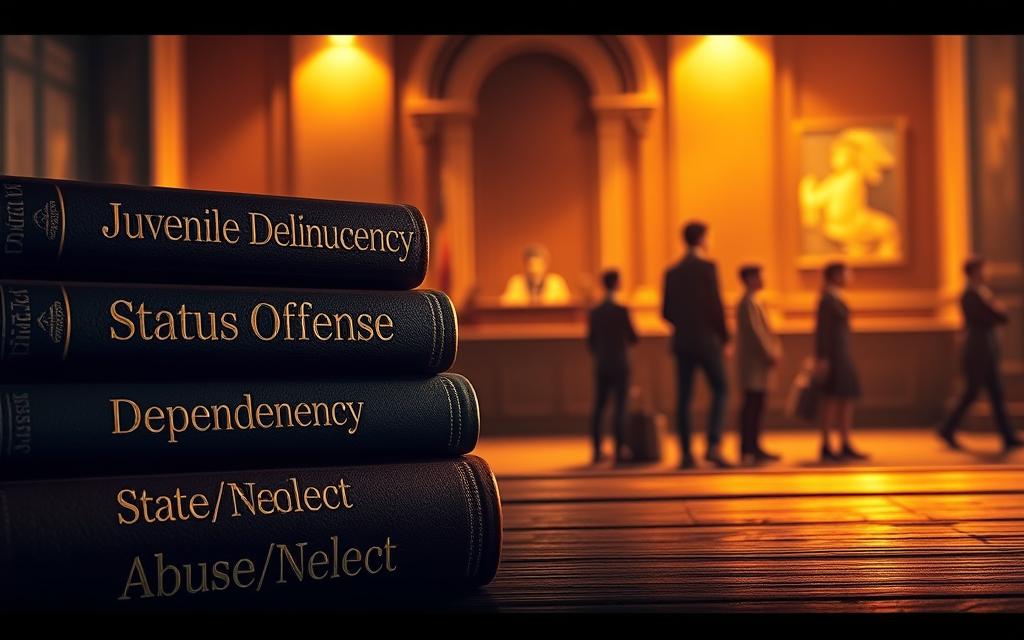
Delinquency Cases
Delinquency cases are for minors who broke the law. These can be big or small problems, like:
- Shoplifting or petty theft
- Vandalism
- Assault or fighting
- Drug possession
- DUI or reckless driving (for older teens)
Juveniles might face charges like grand theft, burglary, robbery, auto theft, and identity theft. The goal is to help them, not just punish.
Status Offenses
Status offenses are only wrong because of the person’s age. Examples include:
- Truancy
- Curfew violations
- Running away from home
- Underage alcohol consumption
These cases are not about criminal acts. They focus on behaviors that are wrong for minors.
Dependency Cases
Dependency cases are for kids taken away from their homes. This is because of abuse, neglect, or danger. The goal is to keep the child safe and find a good home for them.
Every case needs its own legal strategy. This shows why skilled juvenile lawyers are so important. They help protect young people’s rights and future.
The Juvenile Justice Process
Navigating the juvenile justice system can be complex and overwhelming for families. Understanding the key stages helps parents support their child through legal challenges and protect their future.
The juvenile justice process involves several critical steps that determine how a young person’s case will be handled:
Arrest and Initial Procedures
When a juvenile is arrested, law enforcement starts the intake process. A juvenile probation officer carefully reviews the case. They decide whether to:
- Dismiss the case entirely
- Refer to a diversion program
- Send the case to court
Court Hearings and Trials
If the case proceeds, a detention hearing occurs within 24-72 hours. During this hearing, a judge decides if the juvenile should be released or kept in custody.
| Stage | Description |
|---|---|
| Adjudication | Court hearing where evidence is presented to determine if the juvenile committed the offense |
| Disposition | Judge orders a plan including probation, counseling, or community service |
The adjudication process is different from adult trials. It focuses on helping the juvenile, not punishing them. If found responsible, the disposition phase decides the best plan for the juvenile.
Legal representation during these stages is very important. It helps protect the juvenile’s rights and find better solutions.
How to Choose the Right Juvenile Attorney
Finding the right juvenile attorney is very important. It helps protect your child’s future. The right lawyer can help a lot in the complex juvenile justice system.
Parents need to think carefully when choosing. The lawyer will help defend your child’s rights and affect the outcome.
Critical Factors in Attorney Selection
- Specialization in juvenile law
- Years of experience with juvenile cases
- Track record of successful defense strategies
- Local court system familiarity
Essential Questions to Ask During Consultation
When meeting lawyers, have a list of important questions ready:
- How long have you practiced juvenile law?
Knowing how long they’ve worked is key to understanding their skills.
- What percentage of your practice focuses on juvenile cases?
Lawyers who focus on juvenile cases might have better strategies.
- Have you handled cases similar to my child’s situation?
Looking at their past cases can show if they can help your child.
Key Consultation Considerations
Listen to how the lawyer talks and how fast they respond. Ask about their defense strategy, possible results, and fees.
Seeing several lawyers is a good idea. The right one can greatly change your child’s legal path and future.
What to Expect During a Consultation
Going through a juvenile legal case can feel really tough for families. The first meeting with a juvenile attorney is key. It helps you grasp the legal situation and plan a good strategy for your child.
Getting ready for your first meeting is important. You need to gather all the important documents. These will help your attorney build a strong defense for your child.
Essential Documents to Gather
- Any arrest records related to the incident
- Complete police reports or incident documentation
- Court summons or hearing notices
- Written statements from the child or parents
- Relevant school records
- Documentation of special needs or medical diagnoses
- Contact information for witnesses
- Photographs or physical evidence
- Previous juvenile court records, if applicable
What to Expect During the Consultation
Most juvenile attorneys give free first meetings. During this time, the attorney will:
- Ask lots of questions about the case
- Explain the laws and steps involved
- Talk about possible defense plans
- Share how they charge for their services
- Let you ask any questions you have
| Consultation Aspect | Parent’s Objective |
|---|---|
| Attorney Experience | Check if they know a lot about juvenile law |
| Communication Style | See if they are clear and caring |
| Case Strategy | Learn about possible results |
| Cost Structure | Make sure you know the costs |
By the end of the meeting, you should know a lot. You’ll understand the legal steps, costs, and how you’ll help your child’s case.
Legal Rights of Minors
It’s hard for young people to understand the law. Knowing the rights of minors is key to keeping them safe and treated fairly.
Minors have special legal protections. These help keep them safe during their growing years. These rights help make sure justice is fair for them.
Comprehensive Rights Overview
- Right to legal representation
- Protection against self-incrimination
- Right to privacy
- Protection from excessive punishment
- Right to notice of charges
Critical Legal Protections
The U.S. legal system has important rights for minors in court:
| Right | Description |
|---|---|
| Miranda Rights | Juveniles must know their right to stay silent and ask for an attorney |
| Confidentiality | Court records and hearings are usually kept secret to protect the minor |
| Due Process | Fair hearings with the right lawyer and chance to defend |
Knowing these rights helps minors and their families deal with legal issues better. Parents and guardians are very important in making sure these rights are respected.
Importance of Legal Awareness
Understanding legal rights is a strong tool for young people. It helps protect them from legal dangers and ensures they are treated fairly.
Common Misconceptions About Juvenile Attorneys
Navigating the juvenile justice system is tough for families. Misunderstandings about legal help often stop parents from making good choices. These choices could protect their child’s future.
Parents often meet myths about juvenile attorneys that can hurt their child’s legal position. It’s key to know the truth about these myths for good legal support.
Debunking Juvenile Defense Myths
- Myth: Hiring an attorney makes my child look guilty
Reality: Using your rights doesn’t mean you’re guilty. A lawyer helps ensure fair treatment and protection in court.
- Myth: Juvenile charges aren’t serious
Reality: Charges can lead to big problems like detention, probation, and records that affect the future. Some cases might even go to adult court.
- Myth: Public defenders are equivalent to private attorneys
Reality: Public defenders work hard but have too many cases. Private lawyers usually give more time and resources to each case.
Critical Facts About Juvenile Defense
Juvenile defense is a special legal field. It needs deep knowledge of kids, court rules, and minors’ rights. Good legal help can change the outcome, from court to programs.
Lawyers do more than just defend in court. They talk to prosecutors, work with probation officers, find legal mistakes, and push for solutions that help kids grow.
Getting a lawyer early can really help. It opens up more options and ways to tackle legal problems.
The Impact of Juvenile Convictions
Juvenile convictions can have big effects that last a long time. They can change a young person’s future in big ways. This includes their education, job chances, and personal growth.
The effects of a juvenile conviction are deep and wide. They touch many parts of a young person’s life. It’s important for families and lawyers to know these effects to help lessen the harm.
Short-Term Consequences
Right away, a juvenile conviction can be very hard. It might include:
- Being suspended or kicked out of school
- Having to go to counseling or rehab
- Having less freedom
- Being on probation or in detention
Long-Term Effects on Life
Convictions when you’re young can make life hard in many ways:
- Educational Limitations
- It might be harder to get into college
- You might not get scholarships
- You might not be able to join certain programs
- Career Obstacles
- It can be hard to pass background checks
- Employers might have trouble with you
- You might not get professional licenses
- Personal Development
- You might feel ashamed or judged
- It can affect your mental health
- You might feel less confident
Getting help from a lawyer early on can make a big difference. It can help young people get back on track and succeed in the future.
Alternatives to Court for Juvenile Offenses
The juvenile justice system helps young people instead of punishing them. A juvenile probation officer helps decide what’s best for them.
In the U.S., new ways to handle youth problems are being tried. These methods aim to help them change their ways and not get into trouble again.
Diversion Programs: A Constructive Approach
Diversion programs are a big help for young people. They offer support and learning chances to keep them out of court.
- Community service assignments
- Counseling and mental health support
- Educational workshops
- Skill-building programs
Mediation and Restorative Justice
Restorative justice brings together offenders, victims, and the community. It helps fix the harm done and find solutions.
| Program Type | Key Characteristics | Potential Outcomes |
|---|---|---|
| Victim-Offender Mediation | Direct dialogue between parties | Increased empathy and understanding |
| Community Conferencing | Broader group involvement | Accountability and community healing |
| Restorative Circles | Collaborative problem-solving | Personal growth and behavior modification |
Rehabilitation is the main goal of these new ways. They give young people a chance to learn, grow, and fit back into their communities.
The Importance of Parent Involvement

Going through the juvenile justice system is hard for families. Parents are key in helping their child during legal times. They offer emotional support and work for the best outcome.
The legal path for a juvenile is complex and scary. Parents’ help is vital. They teach kids about their rights and guide them through tough legal times.
Role of Parents in Legal Process
Parents are not just watching in their child’s legal battles. They are important helpers with big jobs:
- They go to all court hearings and legal meetings
- They talk a lot with the juvenile attorney
- They collect and keep important documents
- They give emotional support to the child
Strategies for Supporting Your Child
Helping a child through legal issues needs care and planning. Here are key ways parents can help:
- Talk openly with your child about the legal process
- Look for professional counseling if needed
- Help your child understand possible outcomes
- Work closely with the legal team
Being active in your child’s legal case can really help. By being informed, supportive, and involved, parents can lead their kids to better futures.
How Juvenile Attorneys Build a Defense
Defending a juvenile is more than just legal work. It’s about using special methods to protect young clients. This helps them keep their rights and future chances.
Good defense starts with a deep look into each case. Attorneys know how important it is to understand juvenile law. They also think about how legal actions can affect a child’s future.
Investigation and Evidence Collection
The defense process has many important steps:
- Looking over all case documents carefully
- Talking to witnesses and getting their stories
- Checking police reports and investigation files
- Gathering good things about the child
- Looking at school and medical records
Developing a Defense Strategy
Juvenile attorneys work on plans that help the child grow and succeed. The aim is to solve the legal issue and help the child’s future.
Some key strategies are:
- Looking into alternative programs
- Talking about smaller charges
- Showing why the situation isn’t as bad
- Pointing out the child’s good qualities
- Suggesting counseling or school help
Good defense means understanding the child’s life, challenges, and chances for a better future.
Resources for Families
Finding your way through the juvenile justice system can feel really hard. It’s important to get the right help and learn about legal issues. This helps protect your child’s future.
Families dealing with juvenile legal issues need a lot of help. They need good guidance and support. Here are some resources that can help a lot during tough times.
Key Support Organizations
- National Juvenile Defender Center – Provides legal training and advocacy
- Coalition for Juvenile Justice – Offers policy recommendations and support services
- Justice for Families – Supports families experiencing juvenile justice challenges
Educational Materials and Resources
To understand juvenile law, you need good educational materials. Parents can use many resources to learn and help their kids.
| Resource Type | Description | Accessibility |
|---|---|---|
| Online Guides | Comprehensive legal information | Free digital access |
| Workshops | Interactive legal education sessions | Local community centers |
| Legal Clinics | Professional guidance and consultation | Sliding scale fees |
Learning and getting support early can really help with juvenile legal issues.
The Future of Juvenile Justice
The world of juvenile justice is changing fast. New studies, awareness, and a focus on helping young people are leading the way. Leaders and supporters are working to make the legal system better for kids.
Lawmakers are making big changes. They’re moving from harsh punishments to kinder, smarter ways to help.
Emerging Legislative Trends
- More focus on restorative justice programs
- Increasing the age when kids can be tried as adults
- Less automatic sending of kids to adult courts
- More mental health and help services
Ongoing Advocacy Efforts
Groups are fighting hard to change the system. They’re working on:
- Keeping young people’s rights safe
- Lowering racial differences in sentences
- Offering different ways to punish
- Supporting school and job training
States like California and Massachusetts are showing the way. They’re making big changes to help kids. Their goal is a fair, supportive system that helps young people grow.
Conclusion
Going through the juvenile justice system can be tough for families. Having a lawyer can really help. Studies show kids with lawyers are 20-30% more likely to have charges dropped.
Dealing with legal issues needs careful planning. Juvenile lawyers know the system well. They help not just in court, but also in understanding how to help your child grow.
Understanding the Critical Role of Legal Support
Every kid should get a second chance after making a mistake. Getting a lawyer early can turn a tough situation into a learning moment. Good legal advice can help your child avoid big problems later on.
Taking Action for Your Child’s Future
If your child is in trouble with the law, act fast. Many lawyers give free first meetings. This lets you talk about your options without spending money. Taking action now can really help your child’s future.